Erg training plan Easy means easy.
Five zones from your own 2k, a progression of 24 sessions and example workouts you can row tonight.
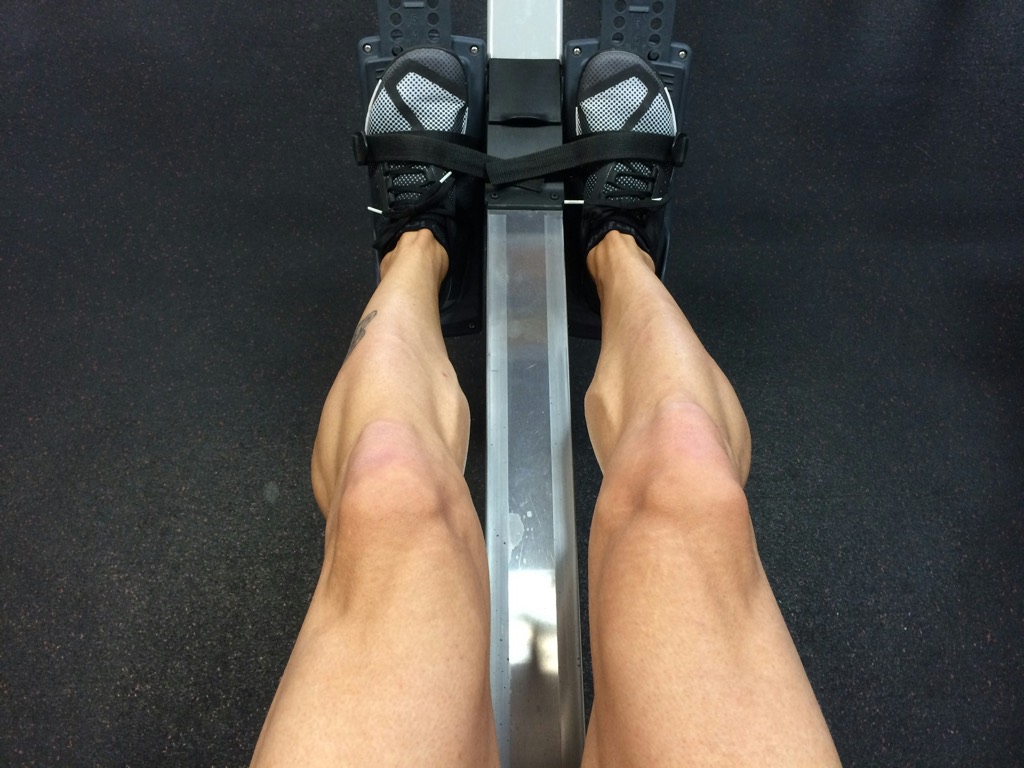
Photo: Kyle Kranz on Unsplash
On the erg it is tempting to go hard every session. You see your split, you see your metres, and faster feels better. Yet you build your engine mostly with easy metres. A good erg training plan tells you how hard to go in every session, and that depends on one number: your 2k time.
Five zones from your 2k
Most rowing coaches work with five zones. The names come from the Concept2 training guide [1], as do the stroke rates per zone:
- UT2, steady state, rate 18 to 20. You can talk in full sentences. This is where most of your erg work goes.
- UT1, hard steady state, 20 to 24. Talking still works, in short sentences.
- AT, threshold, 24 to 28. A few words at a time. Hard, but you can hold it for a while.
- TR, race pace, 28 to 32. You can no longer talk. Sustainable for a few minutes.
- AN, sprint, 32 to 40. Everything you have, short and hard.
Each zone has a split per 500 metres. You work it out from your 2k split: steady state is 18 to 24 seconds slower than your 2k split, hard steady state 14 to 18, threshold 8 to 12, race pace 0 to 3, and a sprint 3 to 6 seconds faster. Those seconds apply to a 2k split of 2:00 and scale with it: faster rowers get smaller steps. This is a rule of thumb close to the Concept2 pace table. A lactate test is more precise.
How it feels beats the split, especially in your first months. If the split doesn't match the feel of the zone twice, adjust your zones or do a new test.
No 2k yet? Row 6 minutes
Pacing a 2k well is hard if you have never done one. A 6-minute test is easier: the time is fixed and it is shorter. After a good warm-up, row as far as you can in 6 minutes, damper at 4 to 5, rate 26 to 32. Start the first minute a little below what you think you can hold and give everything from minute 4. Use your average split plus 2 seconds as your 2k split. Don't train hard the day before a test.
Why so many easy metres
In well-trained endurance athletes, most of the training, about 80 percent, is done at low intensity, and a small part really hard [2]. The trap on the erg is the grey middle: easy work that quietly gets harder. Then you are too tired for the hard pieces and gain little from the easy ones. So keep your UT2 in UT2, even when you feel strong.
24 sessions in four phases
The Rowing Buddy erg plan has 24 sessions in four phases of six. Every fourth session is lighter, and every phase ends with a test, alternating 6 minutes and 2k. You choose the length of each session: 20, 30, 45 or 60 minutes. Longer mostly means more easy metres; the hard part grows only a little.
Base: the stroke and steady state
You learn a clean stroke and row mostly easy, at rate 18 to 20. There are technique sessions, such as the stroke in pieces and rowing with your feet out of the straps. The phase ends with the 6-minute test: that gives you your zones.
Build: longer and harder
Longer blocks at hard steady state, power strokes and a first rate ladder. Halfway through you row 30 minutes at rate 20 as a benchmark, and you finish with a 2k test.
Threshold: moving your limit
Blocks of up to 12 minutes and pieces of up to 2000 metres at threshold, once at a low rate so every stroke has to deliver more. The last block should feel the hardest, not the first. You finish with a second 6-minute test.
Race: fewer metres, more speed
Shorter pieces at 2k pace with rest in between, starts and a dress rehearsal. You finish with a final 2k test.
Example workouts
Five sessions from the plan, in the 30-minute version. Start every session with 4 to 8 minutes of easy rowing and finish with a few minutes of cool-down. Damper at 3 to 5.
| Session | Main set | Rest |
|---|---|---|
| Easy and long | 2 x 11 minutes UT2, rate 18 to 20 | 1 minute |
| First hard steady state | 3 x 6 minutes UT1, rate 20 to 22 | 2 minutes |
| First threshold blocks | 2 x 8 minutes AT, rate 24 to 26 | 2 minutes |
| Over and under | 2 x 8 minutes, switching every 2 minutes between rate 26 and 22 | 3 minutes |
| Race pace | 5 x 500 metres TR, rate 28 to 30 | 2 minutes |
For all of these: every block at the same split. The first block easily goes too fast; the last is the hardest. In over and under you average exactly your threshold split and learn to change pace without tensing up.
Adjusting your zones
Your zones are a starting point. If you row your hard steady state or threshold faster than your zone twice in a row, your zones are probably too slow: make your 2k split 2 seconds faster. If you were well slower twice, first look at sleep, illness and fatigue, and do a light session next time. If you feel fine, do a new 6-minute test. Only count pieces of at least 3 minutes, and work it out over the work pieces: total time divided by total metres, without the rest.
Read on
- Strength training for rowers: how often, three phases of four weeks, and why strength comes before the erg.
- Race preparation: working back from your race, recovery weeks and the taper.
- On-water training and drills: the same zones on the water, with drills and session types.
- Rowing Buddy: the app with this erg plan and your PM5 linked live.
Your target split on the PM5.
In Rowing Buddy the erg plan works out your splits from your own 2k and suggests new zones after a test. With a Concept2 PM5 the app puts the workout on your monitor and reads along live.
What this rests on.
- 1. zones and splitsO'Neill T, Skelton A. Indoor Rowing Training Guide, version 2. Concept 2 Ltd. Copy at Leicester Rowing Club (pdf)
- 2. intensitySeiler S. What is best practice for training intensity and duration distribution in endurance athletes? Int J Sports Physiol Perform, 2010. doi.org/10.1123/ijspp.5.3.276
The five zones are a coaching model, based on lactate thresholds. No controlled study tests the model as a whole, and converting a 2k time into zone splits is a rule of thumb. This page is general information, not personal advice.